3432 Results Show all
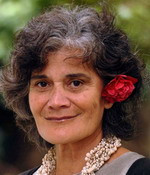
The recently published HRC-funded research into traumatic brain injury (TBI) within Pacific people of Aotearoa is ground breaking for Pacific according to one of the study’s authors, Tagaloatele Professor Peggy Fairburn Dunlop.
“This is a highly significant research for Pacific peoples, in terms of the data. It shows how horrendous our stroke statistics are. While the other major first for this project was the approach it took – it is ground breaking,” Tagaloatele tells Pacific Guardians.
She explains that in the past, the majority of medical (and other) research were conducted by treating the population as one group. It means results of those former studies did not take into account the differences of experience that would be unique to different ethnic groups.
“The Pacific story is different from the mainstream story,” says Tagaloatele. “And this study took the first step of ensuring there was a Pacific sample within the total study, which then disaggregated and interpreted the data.”
Head author, Senior Research Fellow, Alice Theadom agrees with Tagaloatele in an email response to Pacific Guardians.
“As Peggy suggested, this study highlights the importance of looking at how injuries affect different ethnic groups within New Zealand so that we can develop targeted prevention strategies to reduce the number of injuries that occur in the future.
“We were very keen that the study had a Pasifika focus and therefore as part of this project we wanted to look at the frequency brain injuries were occurring for Pasifika in comparison to New Zealand Europeans as well as how injuries were being sustained to help inform prevention strategies.”
The project, conducted by a fourth year Pasifika physio student, formed part of a larger study that identified all cases of traumatic brain injury that occurred in the Hamilton and Waikato regions of New Zealand over a one year period.
“The project revealed that the incidence of traumatic brain injury was far higher in Pasifika (1242 per 100,000) when compared to NZ Europeans (842 per 100,000),” Ms Theodom confirms to Pacific Guardians.
“Injuries were also sustained at a younger age by Pasifika. Peaks in incidence were observed in 0-4 year olds and 15-24 year olds with injuries most commonly caused by falls or being hit by an object.”
Ms Theodom says that placing the data in context show most of the injuries “were sustained during sports and recreational activities and activities of daily living.”
It means the information will help the development of targeted prevention strategies to reduce the number of injuries in the future.
She adds the study also highlighted the “importance of raising awareness of brain injury and the responsibility we all have as members of our society to look out for people who have experienced a hit to the head and who feel dazed and confused afterwards to ensure that they seek medical attention and get the support they need to make an optimal recovery.”
For Tagaloatele, there two significant outcomes of the project for Pasifika were the isolation of Pacific as a research population group; and the use of “Pacific researchers” in the project.
“This Pacific picture [from the study] is important to our Pacific communities as it emphasizes what we need to do as too many Pacific people are suffering from stroke.
“It is also highly important data for health sector planning as it highlights that no one programme fits all. It means that health programmes, such as those for stroke, can now be tailored to Pacific as data are now becoming available.”
Tagaloatele adds, “My hopes are that the way this study was carried out, the inclusion of Pacific peoples and Pacific researchers, becomes the model for other medical research.”
Pacific peoples involved in the study:
Wesley Lagolago: Research Assistant, National Institute for Stroke and Applied Neurosciences, AUT University, Auckland. Mr Lagolago was the recipient of a 2014 HRC Pacific Health Summer Studentship Career Development Award for his project 'Understanding traumatic brain injury in the Pasifika population of New Zealand'.
Alice Theadom: Senior Research Fellow, National institute for Stroke and Applied Neurosciences, AUT University, Auckland.
Tagaloatele Professor Peggy Fairbairn-Dunlop: Professor of Pacific Studies, Institute of Public Policy, AUT University, Auckland.
Shanthi Ameratunga: Professor of Epidemiology, Section of Epidemiology & Biostatistics, School of Population Health, the University of Auckland.
Braden Te Ao: PhD Student and Māori Health Researcher, National institute for Stroke and Applied Neurosciences, AUT University, Auckland.Article by Lealaiauloto Aigaletaulealea F. Tauafiafi.
Source: Pacific Guardians |Pacific Perspectives from AotearoaClinical trials that involve the use of a new medicine require approval under Section 30 of the Medicines Act 1981. The Health Research Council's Standing Committee on Therapeutic Trials (SCOTT) undertakes scientific assessment of applications to conduct trials and makes recommendations to the Director-General of Health on whether or not trials should be approved.
Public submissions are now being called for the draft Terms of Reference for SCOTT.
The closing date for submissions is 11.59pm, Friday 12 July 2024.
The draft Terms of Reference for SCOTT proposes new processes, procedures, and principles for the Committee, including their function to provide recommendations to the Director-General of Health.What do you need to know?
- The draft Terms of Reference and accompanying Public Consultation Brief are available below under 'Related content'.
- Submissions must be made via the webform below. You will be asked to:
- Enter your personal or organisation’s contact details into a webform. This information will be kept confidential to the Health Research Council of New Zealand.
- Upload your submission document. This will be publicly released by publishing to the Health Research Council of New Zealand website.- Only your name or organisation’s name is required on the submission document; please do not include your contact details.
- Please do not include information of a private or personal nature in your submission.
Further guidance on making a submission can be found in the Public Consultation Brief accompanying the draft Terms of Reference.
Submissions must be made by the deadline indicated above.
If you have any questions about your submission or the submission process, please contact the Health Research Council at SCOTT@hrc.govt.nz
Public health researchers from the University of Otago, Wellington (UOW), are concerned that some food and drink companies selling unhealthy food also sponsor popular, televised sports in New Zealand.
The authors reviewed the websites of 308 New Zealand sports organisations covering 58 sports to identify sponsors and conducted 18 interviews with key administrators from national and regional sporting organisations. A quarter of websites had links to sponsors.
Sponsors were classified as healthy or unhealthy using the New Zealand Food and Beverage Classification System nutrient criteria for energy, fat, salt and fibre levels. The study, which is funded by the Health Research Council of New Zealand, found that a third of food/beverage companies sponsoring sport could be classified as unhealthy.
“Such sponsorship is likely to promote consumption of junk food and dilutes government recommendations promoting healthy eating”, says Associate Professor Louise Signal from Otago’s Health Promotion and Policy Research Unit.
“McDonalds and Coke are the greatest product sponsors, just like at the London Olympics,” Associate Professor Signal noted.
“And one of our most popular sports, rugby, has the unhealthiest sponsorship by far with 23 per cent of brands and logos linked to unhealthy food. In contrast, netball has only 1 per cent linked to unhealthy food.
“Given the recent increase in obesity amongst New Zealand children this is of considerable concern,” says Associate Professor Signal.
Currently, 11 per cent of children aged 5-14 are obese, up from 8 per cent in 2006/7, and at least 20 per cent are overweight. The consumption of junk food is a significant contributor to this problem. Obesity is associated with a range of health problems including childhood diabetes, and heart disease, diabetes and cancer in later life.
“Our children deserve to be protected from the pressure to eat junk food while enjoying healthy outdoor activity, and parents need to be supported against pester advertising in their efforts to promote healthy eating to their children,” Associate Professor Signal argues.
The study by the Health Promotion and Policy Research Unit at UOW also found that some sponsors continued to target children with additional marketing activities.
This is also developed through access to regional clubs and youth players providing them with product samples, merchandise and vouchers for purchasing more product.
“Counting logos does not capture the extent of marketing in sports and probably underestimates the extent of sponsorship,” say the researchers.
“Tactics included the use of ‘Player of the Day’ certificates for budding All White football players as young as four, and promotion of ‘Powerade’ by the All Blacks. ‘Powerade’ is not generally recommended for children,” Associate Professor Signal says.
The study found that healthy food and beverage brands also sponsor sport, with rugby again coming out on top with 21 per cent of logos linked to healthy foods and cricket next highest at 5 per cent.
Increasing such healthy sponsorship is a way to support children eating a healthy diet, say the researchers, and has been shown to have an impact. High participation rates in sport and increasing recognition of how diet benefits athletic performance suggest sports settings are ideal locations for promoting healthy eating.
All sports administrators identified the main benefit of sponsorship as financial. Although many reported sports organisations felt concerned about associating themselves with unhealthy foods or beverages, others considered sponsorship income more important than what type of food is being promoted.
Recommendations include sports codes requiring members to place a higher priority on health when selecting sponsors, and government regulation and funding to replace unhealthy food sponsorship with healthy sponsorship, just as for tobacco.
The recently created Health Promotion Agency is currently responsible for tobacco sponsorship replacement in sport. It would be a logical step to include replacement of junk food sponsorship in their mandate.
The paper has recently been published in BMC Public Health.
News article courtesy of the University of Otago, Wellington.
Introducing our new focus areas
The National Trauma Symposium 2024 conference programme consists of scientific presentations, facilitated debate on hot topics, and wānanga spaces for all trauma practitioners to share lessons learnt.
For more information and to register visit the conference website.
Research into the mechanisms contributing to chronic kidney disease, as well as new therapeutic options for its management, has been awarded funding through the Health Research Council’s 2023 NZ-China Biomedical Research Alliance Fund.
The University of Otago’s Professor Robert Walker will lead the project alongside Professor Xiaoqiang Ding and colleagues at the Department of Nephrology, Shanghai Zhongshan Hospital, Fudan University, China.
This investment is supported through the Ministry of Business, Innovation & Employment’s (MBIE) Catalyst Strategic Fund, aimed at facilitating the development of research collaborations between New Zealand researchers and Chinese colleagues.
See below for more details on the research project:
Elucidating pathways of kidney injury and repair – new therapeutic options?
Professor Robert Walker, University of Otago
36 months, $399,340.00
Lay summary (from NZ research team): With Professor Ding and colleagues at the Department of Nephrology, Zhongshan Hospital, Fudan University, Shanghai, China, we plan to set up a collaborative research project elucidating mechanisms of kidney injury and repair to identify new therapeutic options. Professor DIng's group has focused on mechanisms protecting the kidney tubular epithelial cells from ischaemic (reduced blood supply) injury, and our group has focused on pathways associated with drug-induced kidney cell injury and potential therapeutic interventions to prevent the development of interstitial fibrosis (scarring) following injury. Both these forms of kidney injury are common clinical problems. Therefore, combining our expertise to further define key pathways of injury and how these are modified will lead to potential new therapeutic interventions to protect kidneys from damage.Click here to see other research projects awarded funding from the Catalyst Strategic Fund as part of the New Zealand China Strategic Research Alliance.
During the week of 4–8 July, 20 leading New Zealand and European researchers participated in an interactive workshop (Sandpit) in Rotorua to look for innovative ways to investigate the genetic and environmental factors associated with diabetes and obesity. The workshop was supported by the FRENZ (Facilitating Research Cooperation between Europe and New Zealand) project with funding from the European Community’s Seventh Framework Programme and from the New Zealand Ministry of Science and Innovation in conjunction with the Health Research Council of New Zealand (HRC).
The Sandpit brought together researchers from a diverse range of disciplines and backgrounds, with the aim of brainstorming research ideas that could be the basis of new research directions and collaborations that could be translated into funding applications. The Sandpit mechanism has been adapted from that utilised by the UK Engineering and Physical Sciences Council Sandpit model and previously applied by FRENZ within a New Zealand setting. Expert facilitation for the process was provided by KnowInnovation Ltd.
“We're curious about creativity, problem solving, leadership, managing change, research, technology - all the things that go hand-in-hand with innovation. We like to collect people in a room and surprise them with their own ingenuity. Though we have a special place in our hearts for flip-charts and post-its, we love technology and lead rich virtual lives. We've designed and developed a number of intriguing ways to interact and invent using every kind of method: high touch and high tech. We're a virtual team, sprawled across the planet, traveling time zones to do our work, which doesn't really feel like work because we make it fun. Serious play, and all that.”
KnowInnovationAs expected, the Sandpit was a truly intensive process over four full days. By the end of the week the participants, after a welcome powhiri and getting to know each other, had turned more than 250 ‘Post-its’ from brainstorming into 10 collaborative proposals from small groups which covered the full spectrum of research disciplines. The various proposals were presented to the full group who judged them and then plotted them on axes of transformation potential and feasibility. They were then revised to improve these aspects and presented again.
Possible funding sources were outlined which included the European Commission’s Framework Programme and HRC mechanisms augmented by HRC mobility funding to assist further development of on-going research collaborations.
"Yes it was a fantastic experience. To be quite frank, I went to it feeling skeptical about the time it was going to take and what we were actually going to get out of it anyway. In the end, the Sandpit process was a fabulous experience. I got so much form it which will turn into productive research and hopefully societal change in the end. The facilitation was first class. The NZ and European researchers were fantastic. This was an A+ experience. The length and intensive nature were the key to the success."
Professor Grant Schofield
"The Sandpit brought together a very diverse range of skill sets from bioengineering and modelling and basic science through to clinical research and public policy which helped to integrate new perspectives and novel ideas around future obesity and diabetes related clinical research. I found the Sandpit tremendously rewarding and can see that there are likely to be a number of new research proposals being developed by Sandpit groups over the next 12 months. The Sandpit is a very effective approach catalysing and developing new research ideas."
Professor Wayne CutfieldThe New Zealand participants were Professor Geoff Chase, Professor Wayne Cutfield, Dr Ridvan (Riz) Firestone, Professor Ross Lawrenson, Professor Lesley McCowan, Associate Professor Tony Merriman, Dr Rinki Murphy, Associate Professor Cliona Ni Mhurchu, Professor Grant Schofield, Associate Professor Louise Signal and Associate Professor Rachael Taylor. The Sandpit team included Carole Glynn and Gina Deerness-Plesner from FRENZ, Sharon McCook and Fiona Kenning from the HRC, three KnowInnovation facilitators together with Professor Norman Sharpe, Professor Murray Skeaff and Dr Robyn Toomath who helped to guide topic selection and discussion.
Photographs courtesy of Scott Middleton, KnowInnovation Ltd.