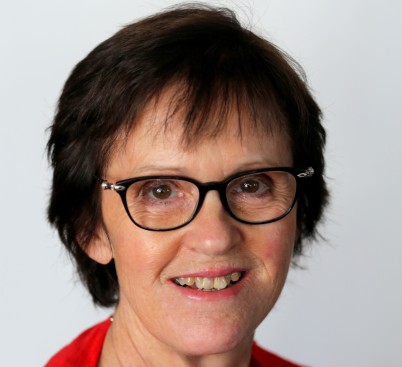
Professor Denise Wilson (Tainui, Ngāti Porou ki Harataunga, Whakatōhea, Tūwharetoa, Ngāti Oneone) has received the Health Research Council (HRC) 2026 Te Tohu Rapuora Medal at the Royal Society Te Apārangi Research Honours in Auckland, recognising her lifetime contribution to transforming how mainstream systems understand and respond to violence affecting Māori whānau.
HRC Chief Executive Professor Hannah Buckley says Professor Wilson, a world-leading authority on Māori and Indigenous health at Auckland University of Technology, has consistently challenged dominant paradigms, exposed structural inequities, and advanced Māori-centred approaches to family violence through her research, policy work, government advisory roles, professional practice, and workforce development.
“Across her career, Denise has produced an extraordinary body of research on family violence prevention and cultural safety that has reshaped understanding of how mainstream systems can unintentionally harm Māori and has supported frameworks for care, protection and healing grounded in mātauranga Māori,” says Professor Buckley.
“Denise’s landmark contributions, including her work for the Glen Inquiry into Child Abuse and Domestic Violence and the Marsden-funded E Tū Wāhine, E Tū Whānau – Māori women keeping safe in unsafe relationships, provided a powerful national account of lived experience that significantly influenced public discourse, policy, and service reform. Her research has also seen her provide expert evidence to the Waitangi Tribunal and the criminal courts.”
Professor Wilson, who is also a registered nurse, says research gives her the opportunity to sit with whānau, hear their stories, and articulate their experiences and challenges.
“It is humbling to talk with whānau about their experiences of family violence. During the six years I spent on the Family Violence Death Review Committee, I became increasingly concerned by the number of Māori women repeatedly seeking support but not receiving the help needed to keep themselves and their tamariki safe,” she says.
“We have much to learn from kaupapa Māori services that engage and connect with whānau in positive and meaningful ways. Asking for help can be difficult for Māori women. Some fear their tamariki will be removed, while others worry about engaging with people who are judgemental or disrespectful.”
Professor Wilson says it is easy to tell women to “just leave” a violent relationship, but the reality is far more complex.
“If they leave, they worry about having somewhere to live, enough money, or access to transport. They do not know how they will keep their tamariki fed, safe and warm. Despite these challenges, they are incredibly resourceful and resilient, developing strategies such as silence, compliance, and isolation to try to stay safe. Our E Tū Wāhine, E Tū Whānau research showed how Māori women actively navigate and resist violence while being constrained by systemic and institutional entrapment.”
Professor Wilson’s recent HRC-funded project, Kei Roto Tō Tātou Rongoā, involved 214 whānau and kaimahi (most with lived experience) across seven kaupapa Māori service providers. The research highlighted the severe challenges many participating whānau were facing while also identifying solutions, informing government agencies, and providing practical resources for whānau and service providers.
Her work has also helped bring the concept of “culture as cure” to the forefront, demonstrating that strengthening cultural identity is central to violence prevention and healing.
“Learning about our cultural values and practices gives whānau an alternative set of skills and knowledge in their kete, enabling them to make different choices. I have sat down with tāne who grew up surrounded by violence and spent significant time in prison, and many have told me that reconnecting with their culture and strengthening their identity was the turning point in their healing journey,” says Professor Wilson.
“Everyone I have spoken to through my research wants the best for their tamariki and mokopuna. Most of the women I have met simply need the space and stability to regroup, regain balance, and pursue their hopes and aspirations for themselves and their tamariki.”