The Christchurch Regenerative Medicine and Tissue Engineering (CReaTE) Research Group has developed new bioinks – materials used to produce engineered or artificial live tissues using 3D printing – for helping aid bone healing.
Across five HRC-supported contracts, the CReaTE Research Group, including engineers and biotechnologists Professor Tim Woodfield, Professor Khoon Lim and Dr Gabriella Lindberg, has advanced innovative regenerative medical technologies for bone engineering, developing cell-laden hydrogels (bioinks) and methods for 3D-bioprinting scaffolds to support the regeneration process for repairing bone and cartilage tissue in human patients.
The technology has the potential to reduce the need to harvest bone grafts from patients and the number of revision surgeries required, reducing financial pressures on the health and social care systems.
As part of this work, Professor Woodfield and his team created a sophisticated 3D in vitro disease model from patient cells to study how cartilage can heal and repair itself in different situations, whether someone is healthy or dealing with a disease such as osteoarthritis. This was also the first study of its kind to focus on cartilage regeneration in vitro across a New Zealand-specific population.
“The technology has the potential to reduce the need to harvest bone grafts from patients and the number of revision surgeries required, reducing financial pressures on the health and social care systems.”
“Our 3D in vitro model helps us bridge the gap between laboratory experiments and real-world treatments, and harnessing automated biofabrication of human tissue models provides scalable or high-throughput capability for drug screening, precision medicine and regenerative medicine,” says Professor Woodfield.
“This also means we can more easily ensure that new biomaterial treatments are effective for patients with more severe disease progression, which remains a major unsolved clinical challenge both in New Zealand and across the globe.”
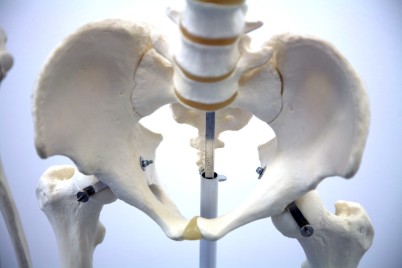
Professor Lim and his team have developed an injectable hydrogel system that can be used to treat avascular necrosis of bone in the femoral head (a condition where loss of blood supply to bone leads to joint dysfunction and severe osteoarthritis of the hip). Regenerating bone prevents disease progression and the need for total hip replacement surgery. Their next step is to further develop this hydrogel system into a commercial product for clinical uptake.
The HRC’s investment has also supported the ongoing development of a local and highly specialised workforce in 3D-bioprinting and advanced manufacturing technology with future potential to establish New Zealand as a global leader in the high-value niche area of additive biomanufacturing and medical devices.
Professor Lim has already successfully generated one full utility patent now granted in five countries and licensed to an overseas company from HRC-funded research.
The investment has leveraged additional resources through international collaboration. In February 2025, Professor Woodfield and team received funding from the prestigious European Union Horizon Europe initiative with joint support from the Ministry of Business, Innovation and Employment, for an international €8 million project called micro@MACRO (m2M) to advance bioprinting technology for cartilage tissue repair in human patients.
Since 2015, the HRC has contributed over $1.8 million to the work of the CReaTE Research Group, primarily through a Project Grant, Explorer Grants and Career Development Awards.